Test review DrivOlution Voyah Free
Test report
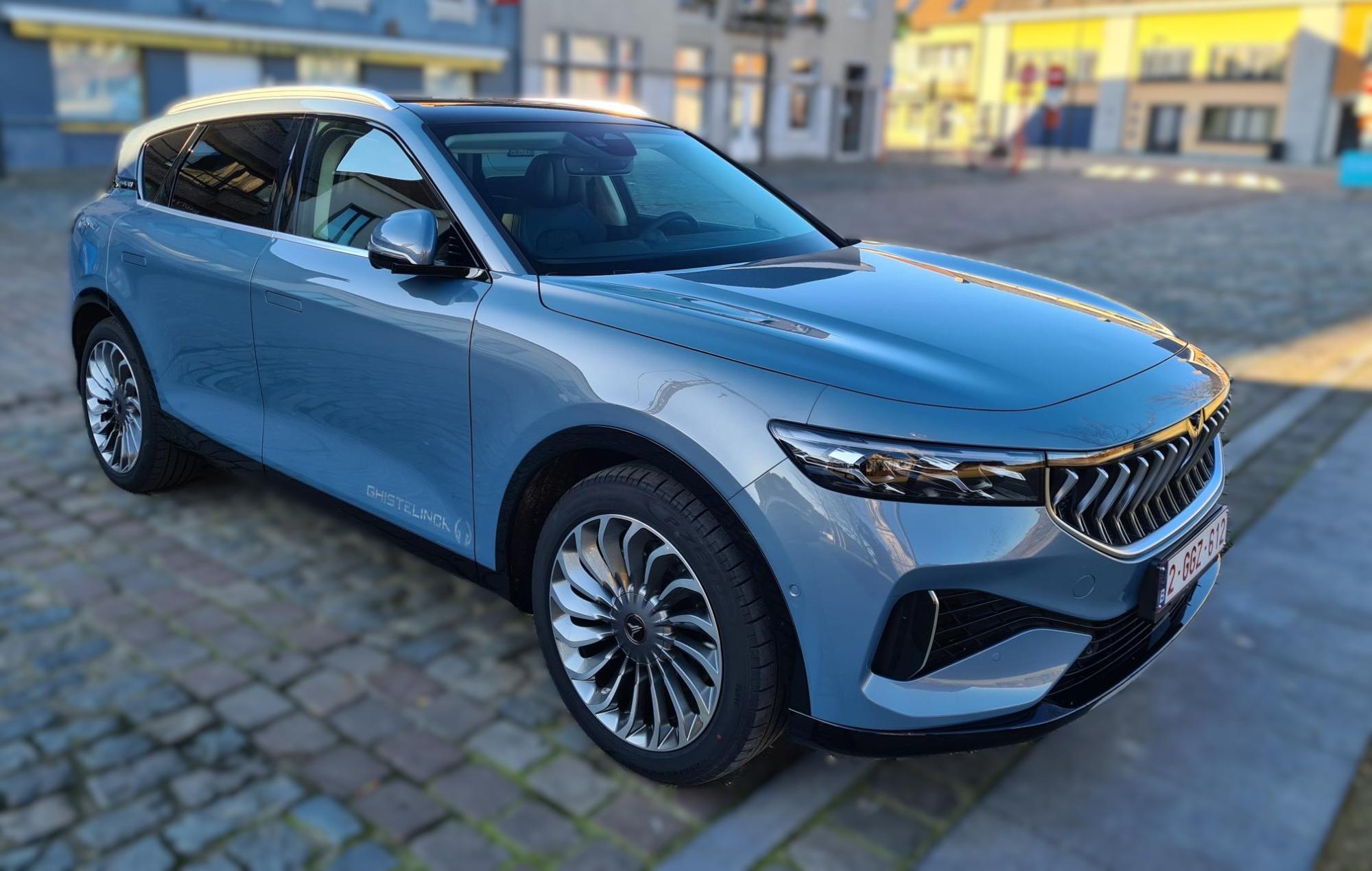
We are introduced to a new Chinese player on the EV landscape namely Voyah. Voyah stands for the beautiful French word ‘Voyage’. It is the luxury division of Dongfeng Motor Corporation (DFM), founded in 1969 in Wuhan. The Voyah Free is a mid-size luxury SUV produced by Dongfeng. Dongfeng is one of China's largest carmakers. It will be introduced in the Chinese market in the third quarter of 2021 and was designed in collaboration with Italdesign Giugiaro.
Voyah currently offers three models: the Voyah Free, SUV; the Voyah Dream, a luxury MPV; and the Courage, which will soon be added to the line-up.
We got to test drive the Voyah Free in the Flagship edition for about four days.
General information
- SUV
- Number of seats 5
- Mass in running order 2.415 kg
- LxWxH (mm) 4.905 x 1.950 x 1.645
Driveline
- BEV (Battery Electric Vehicle)
- Ternary lithium-ion batteries
- 106 kWh Battery capacity (100 kWh usable)
- Power 360 kW (489 hp)
- Torque 720 Nm
- AWD
- Architecture 400 V
- EV-platform DONGFENG ESSA - not EV specific
- Heat pump yes
- Vehicle-to-Load (V2L) : 3.6 kW bi-directional recharging
Consumption/driving range (WLTP) (CoC)
- Combined consumption 20,2 kWh/100 km
- Combined driving range 500 km
- Driving range city 735 km
Recharging information
- Internal onboard charger 11 kW
- Loading Port left rear
- Charge Power AC 11 kW
- Charge Power DC 100 kW max.
- AC : 0 charge
- DC : 2 charges
Test track (109,1 km)
- Non-urban (41,2 km) 16,3 kWh/100 km
- Motorway (47,3 km) 20,9 kWh/100 km
- City (20,6 km) 15,7 kWh/100 km
- Combined 17,6 kWh/100 km
Test results (517 km)
- Non-urban 17,0 kWh/10 km
- Motorway 21,5 kWh/100km
- City 15,7 kWh/100 km
- Combined 19,9 kWh/100 km
Test data
Test drivers
Johan Stevens
517 Testkilometers
Drivetrain
Drive
Platform - ESSA
The Voyah uses the Electric Smart Secure Architecture (ESSA) platform developed by Dongfeng Motor Corporation. This platform is designed to support different types of vehicles, including sedans, SUVs, MPVs and crossovers, with wheelbases ranging from 2,800 mm to 3,200 mm. ESSA offers high scalability and stability, while leaving room for future technological expansions such as electric vehicles (EVs). It can handle different vehicle sizes and configurations. In addition, the ESSA platform incorporates advanced technologies, including intelligent driving assistance systems and connectivity features, which enhance the overall driving experience.
Battery capacity - no choice
The offer is limited to one battery pack in particular 106 kWh of which 100 kWh are usable.
Equipment features of the Voyah Free
- Voyah Free Business: both versions have the same powertrain producing 360 kW (490 HP) and 720 Nm of torque. Both versions are four-wheel-drive and have air suspension.
- Voyah Free Flagship Edition: it offers an automatic dimming panoramic roof, perfumed interior, a Dynaudio Hi-Fi sound system with 10 speakers, active climate control with air quality sensor and a PM2.5 air filtration system.
More information on versions of the Voyah Free can be found at VOYAH FREE Premium E-SUV | VOYAH
Driving modes - 6
Dynamic mode: Eco mode, Comfort mode, Performance mode, Outing mode, Snow mode and Individual mode.
- ECO mode: In ECO mode, the vehicle has a good range and is suitable for driving in normal urban areas.
- Comfort mode: In Comfort mode, the vehicle is comfortable and suitable for driving in normal urban areas.
- Sport (Performance) mode: In PERF (performance) mode, the vehicle has good power and handling, and is suitable for high-performance driving. The power pedal responds ‘sportier’ and the air suspension is lowered.
- Outing mode: is suitable for low-speed driving on light to moderately complex terrain.
- Snow mode: is suitable for low-speed driving on smooth and slippery roads.
- Individual mode: to meet individual driving needs. individual
All driving modes affect the response of the power pedal. The height of the air suspension is automatically adjusted to the standard height.
Energy recuperation
Here the options are somewhat limited. No paddles on the steering wheel with which to control brake energy recuperation. With the power pedal you control the deceleration.
Consumption
The results - overall
After 517 test kilometres aboard the Voyah Free, we arrive at a combined consumption of 19.9 kWh/100 km. This spread over 12 recorded trips. Based on the usable battery capacity of 100 kWh, you could theoretically cover a good 503 km* on a charge. The average outside temperature was 6°C. Clearly, outside temperature has a significant impact on consumption and available range.
The results - by road type
- As always, most of the trips were made on motorways (8 out of 12 trips): it yielded an average consumption of 21.5 kWh/100 km. Good for a driving range of 465 km*. In total, we covered 438.7 km on motorway.
- Non-urban, on secondary roads, we did 3 trips. Good for 57.6 km. This results in a combined consumption of 17.0 kWh/100 km. If you can maintain this consumption, you can cover 588 km*.
- Only once did we venture into city traffic: here we stranded on a consumption of 15.7kWh/100 km. In terms of driving range, this means 637 km*. A short drive of 20.6 km (test course).
The lowest consumption achieved is 15.7 kWh/100 km and the highest is 23.3 kWh/100 km.
The results - by driving mode
Essentially, we focused on efficiency during the trips making Eco Mode the predominant driving mode.
- In 8 out of 12 trips, we chose Eco Mode. It yielded a combined consumption of 19.3 kWh/100 km.
- Comfort Mode (3 out of 12 trips) yielded a consumption of 22.2 kWh/100 km.
- The Individual Mode we chose only once. Moreover, a short drive. It yielded a consumption of 18.1 kWh/100 km respectively.
*The stated driving range is a theoretical calculation based on the usable battery capacity. This is always a snapshot. All kinds of factors such as weather conditions, use of air conditioning, topography, traffic density and your own driving style can influence this.
Test track
Consumption - general
How does the Voyah Free perform on our test track? After 109.1 km, the on-board computer clocked up a combined consumption of 17.6 kWh/100 km on the three sections. Because of roadworks, the drive on motorway is a bit longer than usual. If you can maintain this consumption then, taking into account the usable battery capacity of 100 kWh, you would get 568 km* far on one charge. The average outside temperature was 5°C.
Consumption per road type
- the 41.2 km out-of-town (secondary roads) section yields a consumption of 16.3 kWh/100 km. This results in a driving range of 613 km*.
- on the motorway section of 47.3 km, we arrive at a consumption of 20.3 kWh/100 km which is good for a driving range of 493 km*.
- the city journey of 20.6 km is good for a consumption of 15.7 kWh/100 km. This gets you 637 km* on a charge.
Evoultion Driving range
We started with a driving range of 345 km and an SoC of 77%.
- After the out-of-town drive, we had 294 km left and an SoC of 71%.
- After the motorway drive, the driving range had dropped to 289 km and an SoC of 61%.
- The city drive dwindled the driving range to 262 km and an SoC of 57%.
The total drive cost us 83 km of driving range and 20% of SoC.
*The stated driving range is a theoretical calculation based on the usable battery capacity. This is always a snapshot. All kinds of factors such as weather conditions, use of air conditioning, topography, traffic density and your own driving style can influence this.
We strive to drive as efficiently as possible by making maximum use of cruise control (constant speed) and by anticipating traffic situations as much as possible. The speed on motorways is 110 km/h. Energy consumers (such as air conditioning) are switched off when weather conditions permit. Moreover, we choose the most efficient driving mode (Eco), if available.
Test report DrivOlution Voyah Free test track
Recharging and driving range
Below is an overview of charging sessions. It does note that the battery temperature does play an important role in charging time and capacity. The ‘Prepare battery’ function can be a help here.
Internal on-board charger
The Voyah Free has an 11 kW internal onboard charger. The DC charging capacity is up to 100 kW.
Charging port
You need to open the charging port via the central touchscreen. No physical button.
Charges
Only twice did we charge the Voyah Free. Each time DC charging.
- Charging sessions AC: 0
- DC charging sessions: 2
Information charging process - for the driver
As a driver you are sufficiently informed about the evolution of the charging process. The following information is displayed on the screen:
- Estimated charging time (hh:mm)
- Charging capacity (kW)
- Driving range while charging (km)
- SoC (%) current
- SoC (%) set charge percentage
EV battery temperature management system
The Voyaf Free features an EV battery temperature management system.
Charge percentage adjustable - yes
You can set the charging percentage (SoC) via the on-board computer. There is no advice regarding the recommended charging percentage.
Drive and comfort
Driving comfort
During testing, the focus is not so much on handling. We are not going to go to the extremes. If you keep a calm driving style to it, the Voyah Free drives pleasantly. The air suspension can be adjusted.
Interior
We can safely say that the interior of the Voyah Free does not leave anything to be desired. It oozes quality. The seats feel good and are electrically adjustable with memory function, Moreover, you bsch about seat massage, ventitalite and heating. Do you like the sun on your head? Then you're in the right place because the Voyah Free features a smartglass panoramic roof that automatically dims based on the light.
Moreover, it features a high-quality air filtration system and this through: PM2.5 filtration / intelligent air quality system (IAQS) / perfuming / ecologically active carbon filter / automatic air-conditioning cleaning / all-round air detection sensor.
No lack of screens
The Voyah Free features three 12.3-inch screens running from the A-pillar left to the A-pillar right. Where else have we seen this. On the left, you'll find the driver's instrument cluster. In the centre, you'll discover the navigation and entertainment system. On the far right is another separate screen for the passenger, so they won't get bored either. One downside is that the driver's screen is a bit sensitive to refelection.
Moreover, you can adjust the entire screen height. If you choose Sport mode, this happens automatically.
Space - more than enough
Trunk capacity ranges from 560 L to 1,320 L if you fold down the rear seats. Not forgetting, what people sometimes do with European brands, is the front boot (frunk) with a capacity of 72 L. Handy for storing the charging cables.
Driver assistance systems (ADAS)
Driving assistance systems
The Voyah Free offers a spent range of driving assistance systems. Some are compulsory anyway. Here is a sample of what is on offer:
- Brake assist (EBA/BAS/BA/EVA/etc.)
- Traction control (ASR/TCS/TRC/ATC/etc.)
- ESP Electronic Stability Program (ESP/ESC)
- Steering Assist (TJA)
- Intelligent Speed Assistance (HWA) - as always, we still recommend keeping an eye on the speed limits! The displayed speed on the dashboard is not always correct.
- Integrated cruise control (TJA + HWA)
- Adaptive cruise control (ACC)
- Lane Assist (LKA) / Lane Centre Control (LCC)
- Automatic Emergency Brake (AEB)
- Automatic parking
- Blind spot warning system (BSD)
- Front vehicle start reminder (FVSR)
- Front collision danger warning system (FCW)
- Lane departure warning system (LDWS)
- Lane change warning system (LCA)
- Door opening warning system (DOW)
- Rear Traffic Warning (RCW)
- Rear Traffic Crossing Warning (RCTA)
- Night vision camera
These driving assistance systems are an aid. The final responsibility always lies with the driver.
Driving range simulation (km) based on trip consumption (kWh/100 km) and trip length (km)
Based on trip consumption and usable battery capacity, we can simulate the (theoretical) driving range. Although this is always a snapshot, it gives a clear picture of how far you could theoretically drive at a given consumption. Of course, various factors can influence these results.
Comparison WLTP/test results Drivolution
If we compare the consumption results achieved with the WLTP figures, we score favourably. This both in terms of consumption and driving range.
It is important to point out that the figures obtained are always a snapshot. Numerous factors can influence these results.