Test review DrivOlution MINI Countryman E Essential Trim
Test report
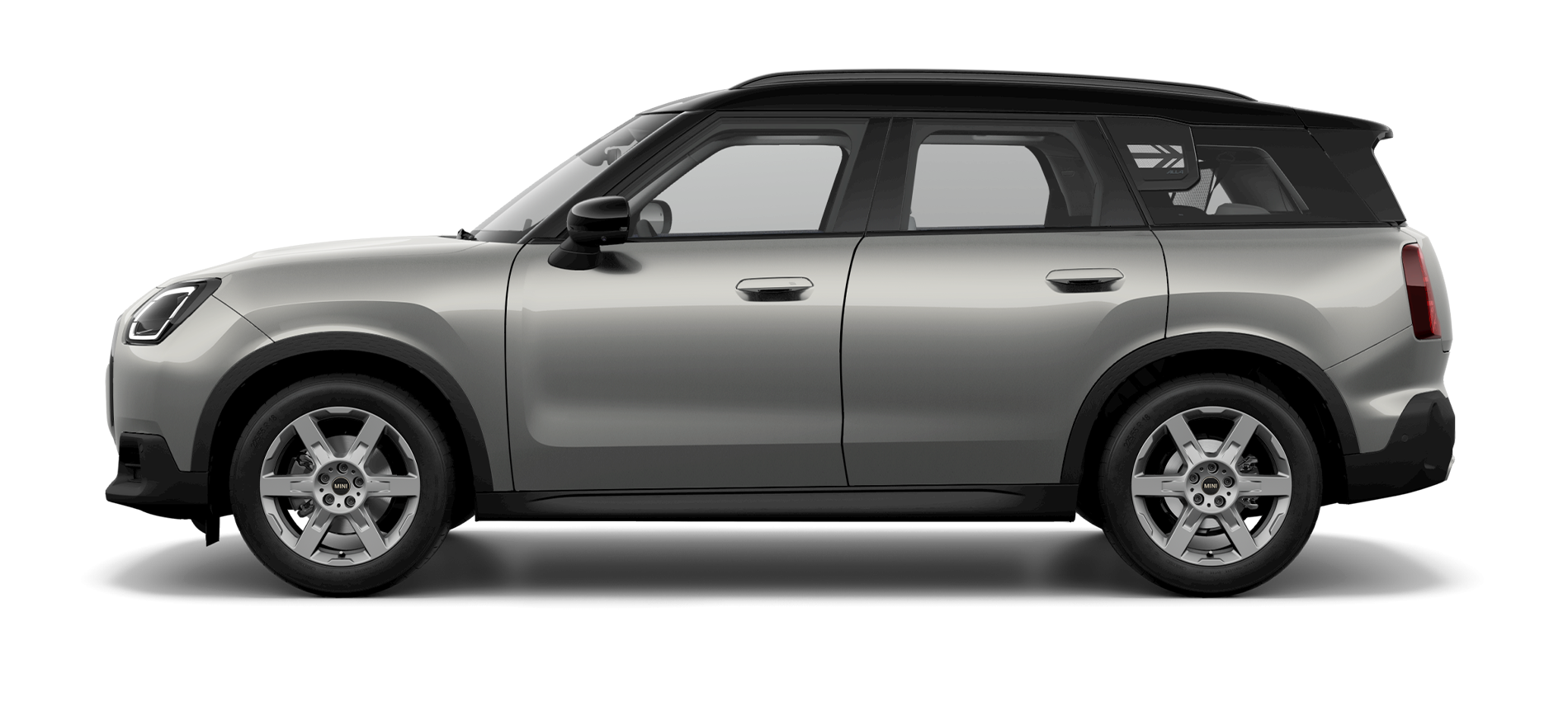
The MINI is growing and pushing boundaries again. After the legendary MINI Cooper S and the bold Aceman, now the Countryman sets the tone - the biggest and most versatile MINI ever. For those who have MINI in their blood, but don't want to compromise on space and comfort. The Countryman offers effortless extra freedom without losing its iconic character. This is MINI at its most impressive, ready to take on any challenge.
We had the chance to test drive the MINI Countryman E Essential Trim for a week. As always, our focus was squarely on consumption and driving range—the core of any electric experience. At the end of our test, we also make a comparison with the previously tested petrol version: the MINI Countryman JCW ALL4.
General information
- SUV
- Number of seats 5
- Mass in running order 1.940 kg
- LxWxH (mm) 4.445 x 1.843 x 1.635
- Trailer possible yes (500 kg braked/500 kg unbraked)
- Price Test Vehicle (VATi) 43.315 - euro
- Cargo volume 460 L - 1.450 L
- Cargo volume frunk 0 L
Driveline
- BEV (Battery Electric Vehicle)
- Battery type Lithium-ion (NMC)
- 66,5 kWh Battery capacity (64,6 kWh usable)
- Power 150 kW (204 hp)
- Torque 250 Nm
- FWD (front-wheel drive)
- Architecture 400 V
- EV-specific platform - no - BMW FAAR
Consumption/driving range (WLTP) (CoC)
- Combined consumption 16,0 kWh/100 km
- Combined driving range 454 km
- Driving range city 561 km
Charging information
- Internal onboard charger 11 kW
- Charging port rear right
- Charge Power AC 11 kW
- Charge Power DC 130 kW max.
Test track (107,7 km)
- Non-urban (42,7 km) 10,6 kWh/100 km
- Motorway (44,0 km) 12,6 kWh/100 km
- City (21 km) 9,4 kWh/100 km
- Combined 10,9 kWh/100 km
Test results (806 km)
- Non-urban 13,7 kWh/100 km
- Motorway 13,0 kWh/100km
- Urban 9,4 kWh/100 km
- Combined 13,0 kWh/100 km
Test data
Test drivers
Johan Stevens
806 Testkilometers
Drivetrain
"The power of Choice" - ook bij MINI
In line with BMW's philosophy of "The Power of Choice ", MINI also pulls through this strategy. The brand offers customers the freedom to choose between all-electric drive or classic internal combustion engines (ICE), depending on their needs and driving profile. With one exception: the MINI Aceman - a pronounced statement in the range - is only available as an all-electric variant. In doing so, MINI underlines both its electric ambitions and its commitment to a wider audience.
FAAR platform applied to the MINI Countryman Electric
The new MINI Countryman is the brand's first model built entirely on the BMW FAAR platform. In doing so, MINI ushers in a new era: with larger dimensions, more interior space and a wide range of powertrains. Thanks to the flexibility of the FAAR platform, both internal combustion engines and fully electric versions can be developed on the same basis. In the case of the Countryman E and SE ALL4, this means freedom of choice without compromise - completely in line with BMW's strategy of "The Power of Choice".
Two versions - Countryman E and the Countryman SE ALL4
The all-electric MINI Countryman is available in two versions: the Countryman E and the Countryman SE ALL4. Both models share the same battery pack of 64.6 kWh net, good for a decent driving range in real-world conditions. The difference is in the drivetrain: where the Countryman E has front-wheel drive, the SE opts for all-wheel drive (ALL4) - ideal for those who want extra grip and power.
Model | Drive | Power | Torque | WLTP driving range |
|---|---|---|---|---|
MINI Countryman E | Front-wheel drive | 150 kW (204 hp) | 250 Nm | uptill 462 km |
MINI Countryman SE ALL4 | Four-wheel drive | 230 kW (313 hp) | 494 Nm | uptill 433 km |
- Power & torque: The SE ALL4 is clearly more powerful and sportier, with more horsepower AND almost double the torque. Ideal for those looking for faster acceleration and more pulling power.
- Driving range: Due to the extra engine (all-wheel drive), the SE's official WLTP driving range is slightly lower than the E version, although both have the same battery capacity (64.6 kWh net).
- Use: Choose the Countryman E for maximum efficiency and range, or go for the SE ALL4 if performance and grip outweigh a few extra miles.
MINI Modes: three faces of one character
The MINI Countryman E offers a choice of three characterful driving modes, each evoking its own mood, behaviour and experience:
Green Mode
The most economical and conscious choice. This mode optimises power response for maximum efficiency and driving range. The green ambient lighting underlines its sustainable nature, and the interface helps you drive anticipatively - perfect for those who want to get every kilometre out of their battery. Green mode is our favourite mode!Core Mode
The default mode at start-up. Core Mode delivers the classic MINI driving experience in a modern twist. With the Laguna colour scheme and the unique MINI "brand sound" heard both inside and outside, this mode balances comfort, style and brand experience effortlessly.Go-Kart Mode
For the sporty driver. Inspired by the iconic John Cooper Works models, this mode provides an extra dynamic set-up, including sharper steering, red accents and a sporty designed sound. Everything breathes motorsport - from the display to the experience behind the wheel.The MINI Countryman E always starts in "Core" driving mode as standard . This mode is a balanced setting that combines comfort, efficiency and driving pleasure - ideal for everyday use.
MINI Experience Modes
A striking feature in the interior is the use of atmospheric projections. Thanks to MINI Experience Modes, matching colour worlds and patterns are projected onto the dashboard from the rear of the MINI Interaction Unit. Depending on the selected driving mode, not only the display changes, but also the entire ambience of the interior. Available modes include Balance, Timeless, Vivid and Personal, which allow you to customise the driving experience visually and emotionally.
Braking energy recuperation: adjustable to suit your needs
The MINI Countryman E lets you decide how much the car brakes on the electric motor. The central display lets you choose between four levels in D mode: Adaptive, Low, Medium and High. Paddles on the steering wheel are absent, but the intuitive adjustment via the screen makes it easy to play around with the recovery settings. This allows you to tailor the driving experience perfectly to your preference - from relaxed coasting to almost one-pedal driving. In addition, the MINI offers two driving modes via the gear lever: D for natural coasting and B for strong regenerative braking, ideal for city driving and one-pedal driving. Both settings - driving mode and driving mode - return to their default positions on restart, which seems to be a deliberate choice by MINI to start with a neutral base every time.
Consumption
After 806 km behind the wheel of MINI Countryman E, this yields the following results.
Summary test analysis MINI Countryman Electric E
✅ General test data:
Total test kilometres: 806 km
Number of trips: 17
Average outside temperature: 19°C
Average test consumption: 13.0 kWh/100 km
Lowest consumption: 9.4 kWh/100 km (City)
Highest consumption: 20.3 kWh/100 km (Short drive, Core mode)
➡️ Comparison with WLTP:
WLTP consumption: 16.0 kWh/100 km
WLTP driving range: 454 km (mixed), 561 km (city)
Test consumption is thus 19% lower than WLTP, which is positive.
?Consumption by road type:
Road type | Average consumption (kWh/100 km) | Number of trips |
|---|---|---|
City | 9,4 | 1 trip (6%) |
Motorway | 13,0 | 11 trips (65%) |
Non-urban | 13,7 | 5 trips (29%) |
- City clearly appears the most efficient - logical due to a lot of regeneration and low speeds.
- Outer roads score slightly worse than motorway, which may be due to shorter trips and temperature differences.
⚙️ Consumption by driving mode:
Driving mode | Average consumption (kWh/100 km) | Number of trips (%) |
|---|---|---|
Green | 12,3 | 13 trips (76%) |
Go-kart | 13,4 | 1 trip( 61 %) |
Core | 16,0 | 3 trips (18%) |
? Green mode performs most economically, below WLTP value.
? Core mode exactly matches WLTP.
? Go-kart offers surprisingly good figures for a sporty mode.
Conclusion:
The MINI Countryman Electric scores more fuel-efficient than its WLTP figure in real-world conditions , especially in Green mode and city driving. Driving mode and route choice have a clear impact on consumption. This indicates strong optimisation of energy consumption in quiet driving conditions.
? Driving range by road type based on test consumption
Road type | Average consumption (kWh/100 km) | Calculated driving range (km) |
|---|---|---|
City | 9,4 | 687 km |
Motorway | 13,0 | 497 km |
Non-urban | 13,7 | 471 km |
Test track
Let's take a look at how the MINI Countryman E performed on our test course of 107.7 km. We came up with a combined consumption of 10.9 kWh/100 km and this split between the three sections particularly out of town, motorway and city. Based on the usable battery capacity of 64.6 kWh, this would be enough for a (theoretical) driving range of 593 km*.
Let's take a look at the different parts of the test track:
- non-urban - 42.7 km
Starting range: 410 km → Final range: 399 km
Consumption: 10.6 kWh/100 km. This would suffice for a driving range of 609 km*.
SoC: 80% → 72%
Note: Energy consumption is partly offset by recovery/hill driving (battery actually increased from 72% to 80%).
- Motorway - 44.0 km
Starting range: 399 km → Final range: 351 km
Consumption: 12.6 kWh/100 km - at this consumption you will get 513 km* far on a charge.
SoC: 72% → 63%
Note: Expected higher consumption due to higher speeds. Relatively efficient considering the segment of the car.
- City trail - 21.0 km
Starting range: 351 km → Final range: 333 km
Consumption: 9.4 kWh/100 km, good for a driving range of 687 km*.
SoC: 63% → 60%
Note: City is clearly the most efficient environment for this BEV, thanks to energy recovery.
✅ Conclusion for the test track
Over the full test course of 107.7 km, the driving range decreased by 77 km and the battery percentage by 20%. This equates to an average energy consumption of about 11.0 kWh/100 km, which is exceptionally efficient for an electric crossover with a net battery capacity of 64.6 kWh. Theoretically, this consumption would result in a driving range of more than 590 km.
The MINI Countryman E thus shows itself as a particularly economical EV in practice, especially in urban and rural stretches.
*The stated driving range is a theoretical calculation based on the usable battery capacity. This is always a snapshot. All kinds of factors such as weather conditions, use of air conditioning, topography, traffic density and your own driving style can influence this.
We strive to drive as efficiently as possible by making maximum use of cruise control (constant speed) and by anticipating traffic situations as much as possible. The speed on motorways is 110 km/h. Energy consumers (such as air conditioning) are switched off if the weather conditions allow. In addition, we choose the most efficient driving mode (Eco), if available.
Charging and driving range
⚡️ General info charging MINI Countryman E
- ? AC charging (alternating current)
Charging capacity: up to 11 kW (3-phase)
Charging time 0-100%: approx. 6.5 hours
- ⚡ DC fast charging (direct current)
Charging capacity: up to 130 kW
Charging time (10-80%): approx. 30 minutes
⚡Charge port: rear right
We have had a total of 3 charges: twice AC and once DC.
⚡️ Charging analysis MINI Countryman E
Charging session | Charging type | Driving range before charging (km) | Driving range after charging (km) | SoC increase (%) | Recharged driving range (km) | Efficiency (km/%) |
|---|---|---|---|---|---|---|
Session 1 | AC | 150 | 410 | 42% (38 → 80%) | 260 km | 6,19 km per % |
Session 2 | AC | 221 | 423 | 36% (44 → 80%) | 202 km | 5,61 km per % |
Session 3 | DC | 195 | 387 | 40% (40 → 80%) | 192 km | 4,80 km per % |
Drive and comfort
Interior
The interior of the MINI Countryman E exudes a mix of retro charm and modern technology. At the centre of the dashboard is a striking circular OLED display measuring 240 mm in diameter - a first in the BMW and MINI universe. This circular interface refers to the iconic speedometer from earlier MINI models, but today serves as a full-fledged and multifunctional infotainment system.
OLED-display
The OLED display is not just a visual statement. The screen is built around the new MINI Operating System 9, designed specifically for touch controls and quick access to functions. The top half of the circle is usually reserved for driving information, such as speed, navigation and driver assistance systems. At the bottom are widgets for multimedia, phone, settings and vehicle info.
MINI Experience Modes
What makes the experience unique are the personalisation options and 'MINI Experience Modes'. Each mode (such as Core, Green or Go-Kart) changes not only the mood of the display, but also the ambient lighting and even the sound the car produces when accelerating. The digital clock display appears automatically at idle or in certain driving modes, providing a resting point in the otherwise dynamic display.
?Meet Spike - your digital MINI assistant
Avatars are all the rage, and MINI is responding too. Meet Spike, the digital assistant that not only personalises your ride, but also adds a touch of playfulness to the technology on board. Spike appears on the central OLED screen as a lively, dog-like avatar that helps with navigation, settings and infotainment. He responds to your input and makes technology feel like a companion - typical MINI: quirky, smart and with a twinkle in his eye.
Spike is more than a visual gimmick - he is a personal assistant who helps you while driving. He comes to life on the screen, reacting to certain actions and giving directions or feedback in a fun, playful way. Examples include:
Visual guidance on menus and settings
Responses to voice commands
Tips and animations when charging or setting driving modes
And even a cheerful greeting when starting the car
In addition, the OLED also works with voice control (Hey MINI), is compatible with wireless Apple CarPlay and Android Auto, and integrates perfectly with the head-up display and optional augmented reality navigation system.
Luggage compartment
The MINI Countryman E combines electric driving with practicality thanks to its generous boot space. With a standard capacity of 460 litres, you have plenty of room for groceries, luggage or sports equipment. If you fold down the rear seats, the space even expands to a maximum of 1,450 litres - ideal for longer trips or transporting larger items. The MINI Countryman is the perfect choice for families that are ready to expand or for travellers who like to carry lots of luggage. With a generous and flexible boot space of up to 1,450 litres, this electric SUV offers plenty of room for everything you want to take with you, from prams to suitcases. Thus, the Countryman effortlessly combines comfort and practicality with sustainable mobility, making it ideal for modern family life and adventure travel.
Driver assistance systems (ADAS)
The MINI Countryman E is equipped with a range of Advanced Driver Assistance Systems (ADAS). Here is an overview of the main features, broken down into categories:
Driving assistance systems - MINI Countryman E
? Driving
- Active Cruise Control with Stop & Go
→ Automatically adjusts speed and fully stops in congestion traffic if necessary. - Lane Departure Warning
→ Warns if you unintentionally leave your lane. - Lane Keeping Assistant
→ Steers subtly to keep you within your lane. - Speed Limit Assist
→ Recognises traffic signs and adjusts speed recommendations on the display or cruise control. - Forward Collision Warning with Active Brake Assist
→ Detects risk of collision and automatically brakes if necessary.
?️ Parking
- Park Distance Control (PDC)
→ Front and rear ultrasonic sensors with visual & audible warnings. - Rear camera
→ Helps with precise manoeuvres. - Parking Assistant
→ Automatic queue parking and coasting. - Reversing Assistant
→ The vehicle remembers the last 50 metres and automatically reverses on the same route - useful in narrow streets or garages.
? Perception & comfort
- Driver Attention Monitoring
→ Detects signs of fatigue or distraction. - Cross Traffic Alert (rear)
→ Warns of traffic from the side when reversing. - Blind Spot Warning
→ Warns of vehicles in the blind spot (optional).
? Additional features (depending on trim/options)
- Head-up display
- Adaptive LED headlights with high beam assist
- Navigation with anticipatory speed adaptation via MINI Navigation
These systems are tuned for safety, comfort and efficiency - and take the Countryman E's handling to a higher level, especially when combined with the quiet electric motor and smooth automatic transmission.
The MINI Countryman E & SE achieved a 5-star score at Euro NCAP in November 2024 - the highest verdict you can get (photo EuroNCAP)
Driving range simulation (km) based on trip consumption (kWh/100 km), trip lengt (km) and usable battery capacity (kWh
Driving range simulation: a snapshot of what is possible
Based on the measured trip consumption (in kWh/100 km), the type of road and the usable battery capacity, a simulation of the theoretical driving range can be made. This calculation offers an indication of what to expect in practice, but remains a snapshot. Factors such as weather, traffic density, speed choice, height differences and especially your driving behaviour can significantly influence the consumption - and thus the range. So the figures mainly give an insight into potential, not a guaranteed result.
Comparison WLTP/test results Drivolution
During our week of testing, the MINI Countryman E performed remarkably more efficiently than according to official WLTP values. Whereas WLTP consumption is at 16.0 kWh/100 km (good for 454 km of driving range), we came out at 13.0 kWh/100 km - good for a real driving range of 497 km. On a separate test track, consumption even dropped to 10.9 kWh/100 km, giving a theoretical driving range of 593 km. The chosen driving style is an important factor in achieving the results.
We do underline that these are snapshots. Factors such as outside temperature, driving style, route profile and tyre pressure can have a major impact on consumption and driving range.
Compare tested MINI cars (BEV)
How do electric MINIs really perform?
We tested three electric MINIs in different seasons: the Cooper SE (autumn), Aceman SE (winter) and Countryman E (summer). The differences in consumption and driving range are striking.
The Cooper SE scores nicely with consumption of 12.4 kWh/100 km, better than its WLTP figure. The Aceman SE visibly suffers from the winter cold with 16.0 kWh/100 km, considerably more than WLTP. The biggest surprise is the Countryman E, which consumes just 10.5 kWh/100 km in summer conditions.
What does that mean for the driving range?
- Cooper SE: 397 km (test)
- Aceman SE: 301 km
- Countryman E: a whopping 495 km
The conclusion is clear: seasons play a big role. Those looking for efficiency as well as range will find the champion in the Countryman E - especially in hot conditions.
Test review MINI Cooper SE Test review DrivOlution MINI Cooper SE | DrivOlution
Test review MINI Aceman SE Test review DrivOlution MINI Aceman SE | DrivOlution
Comparison MINI Countryman JCW ALL4 versus MINI Countryman E
Consumption comparison: JCW versus E - two completely different characters
Although a direct comparison is not entirely valid - the sporty ICE variant JCW ALL4 versus the quiet, electric Countryman E - the test track does shed some interesting light on their efficiency. Both cars were driven in identical conditions and with an energy-efficient driving style. The results speak for themselves: in town, the Countryman E consumes barely 9.4 kWh/100 km ( 1.1 l/100 km equivalent), while the JCW comes in at 6.9 l/100 km. On motorway, electric consumption climbs to 12.6 kWh/100 km (1.4 l/100 km equivalent), compared to 5.6 l/100 km for the JCW. Even outside the city, the difference remains clear: 10.6 kWh/100 km (1.2 l/100 km) for the E versus 5.5 l/100 km for the JCW. Despite their disparity, the simulation shows the great potential of electric driving in terms of energy consumption - especially with a calm driving style.