Test review DrivOlution Alpine A290 GTS
Test report
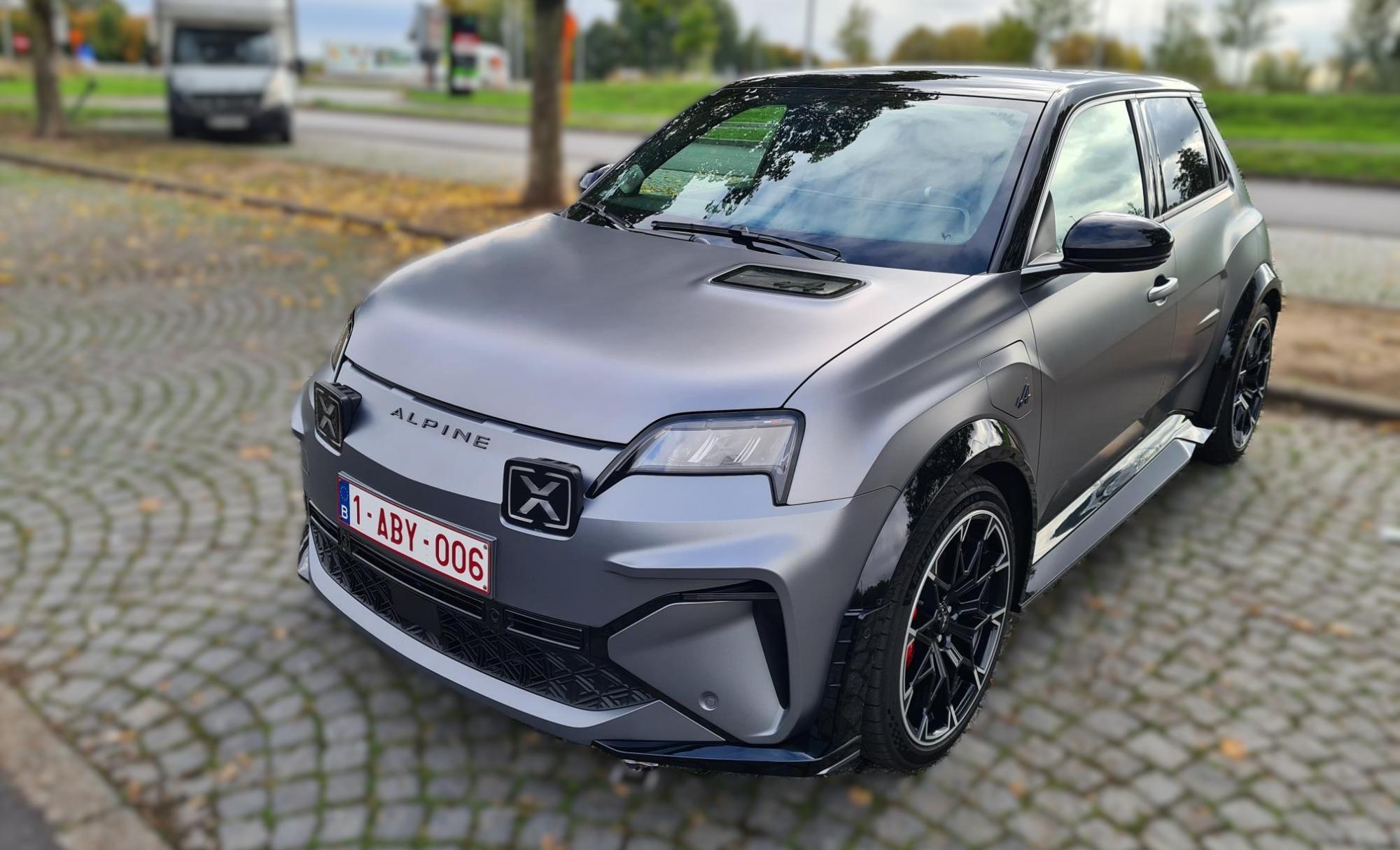
A while ago, we were introduced to the revival of an icon: the Renault 5, completely revamped with an electric engine. Today, its muscular sibling is ready to take centre stage — the Alpine A290. Whereas the R5 focuses primarily on nostalgia and efficiency, the A290 emphasises driving pleasure, precision and sporting emotion.
After all, Alpine is synonymous with lightness, agility and pure driving pleasure — values that the brand has cherished since the legendary A110 and is now translating into the electric era.
As always, our test focuses primarily on driving range and fuel consumption, without losing sight of Alpine's DNA — which revolves around experience and dynamics.
We are already curious to see what it has to offer us during this test week.
General information
- 5D Hacthback
- Number of seats 5
- Mass in running order 1.554 kg
- LxWxH (mm) 3.997 x 1.823 x 1.507
- Price test vehicle (VAT incl.) 47.650, - euro
- Loading volume of boot 326 L / 1.000 L (max)
- Loading volume of front boot 0 L
Drivetrain
- BEV (Battery Electric Vehicle)
- Battery type Lithium-ion (NMC)
- 55 kWh battery capacity (52 kWh usable)
- Power 160 kW (218 hp)
- Torque 300 Nm
- FWD (front-wheel drive)
- Architecture 400 V
- Ev-platform AmpR Small
Consumption/driving range WLTP (CoC)
- Combined consumption 16,6 kWh/100 km
- Combined driving range 361 km
- Driving range city 483 km
Charging information
- Internal onboard charger 11 kW
- Charging port rear front
- Charge Power AC 11 kW
- Charge Power DC 100 kW max.
- AC : 3 charges
- DC : 1 charge
Test track
- Non-urban (43,5 km) 10,6 kWh/100 km
- Motorway (39,2 km) 19,0 kWh/100 km
- City (20,7 km) 9,2 kWh/100 km
- Combined 12,9 kWh/100 km
Test results
- Non-urban 15,4 kWh/100 km
- Motorway 16,0 kWh/100 km
- City 9,2 kWh/100 km
- Combined 15,4 kWh/100 km
Test data
Test drivers
Johan Stevens
809 Testkilometers
Driveline
EV-platform - AmpR Small
Underneath the compact but muscular bodywork of the Alpine A290 lies the AmpR Small platform, the fully electric foundation developed by the Renault Group within its new EV entity Ampere. This platform forms the backbone of the future generation of electric B-segment models, including the Renault 5 E-Tech.
The AmpR Small (formerly known as CMF-B EV) is an EV-native architecture: it was designed from the outset for electric propulsion and not converted from a combustion engine platform. This choice allows for greater freedom in the placement of the battery, motor and interior layout, which translates into optimal weight distribution and a low centre of gravity — crucial advantages for driving stability and comfort.
Battery capacity - no choice
The Alpine A290 has a battery capacity of 55 kWh gross, of which 52 kWh is effectively usable.
It is an NMC battery (nickel-manganese-cobalt) that is placed under the floor for a low centre of gravity and optimal weight distribution.
Model overview
Version | Battery capacity (gross/net) | Power | Torque | WLTP driving range |
|---|---|---|---|---|
A290 GT | 55 kWh / 52 kWh bruikbaar | 180 hp (132 kW) | 285 Nm | ca. 380 km |
A290 GT Premium | 55 kWh / 52 kWh | 180 hp (132 kW) | 285 Nm | ca. 380 km |
A290 GT Performance | 55 kWh / 52 kWh | 180 hp (132 kW) | 285 Nm | ca. 370 km |
A290 GTS* | 55 kWh / 52 kWh | 220 hp (160 kW) | 300 Nm | ca. 360 km |
A290 Première Édition | 55 kWh / 52 kWh | 220 hp (160 kW) | 300 Nm | ca. 360 km |
*Our test version.
Driving modes
The Alpine A290 features the following drive modes that you can select to tailor the driving experience to your preferences and conditions:
Driving mode | Features |
|---|---|
Save | Focused on energy efficiency: flat gearing, lighter steering, less intensive heating/cooling. |
Normal | The default setting: a balance between comfort and dynamics. |
Sport | Enhanced response of throttle and steering input, tighter steering, more engaging experience. |
Perso (Personal) | Customisable mode: you can adjust settings such as steering feel, throttle response, sound, etc.. |
OV-functie (Overboost)
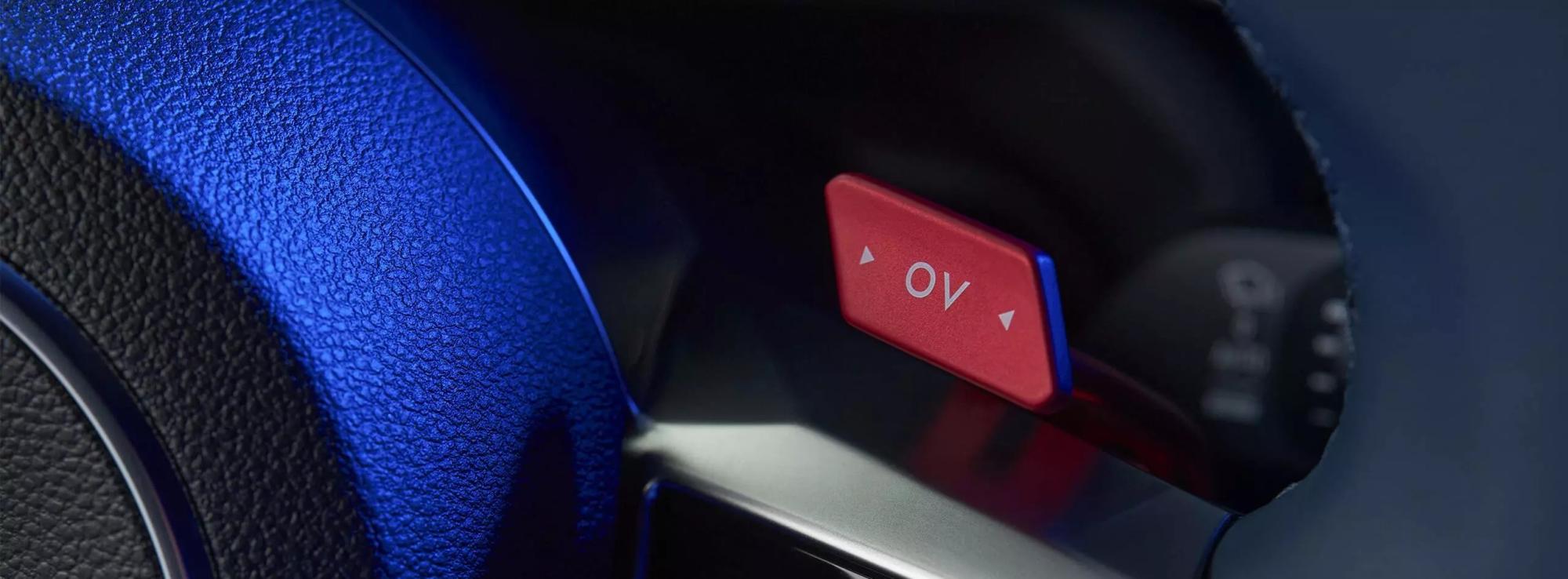
The OV function – in full Overboost – temporarily provides extra power and torque when the driver accelerates to the maximum. In the Alpine A290, the electric motor then delivers increased power above the normal maximum for a short period of time, resulting in faster responses and a sportier driving experience. How do you do that? By holding down the OV button. Nice!
Brake energy recovery - adjustable
It can be adjusted to multiple levels using the right-hand control knob, allowing you to adjust the braking behaviour of the electric motor to your liking.

Below are the different levels:

- C: "the "Freewheel" level for a smooth and economical ride, default value linked to the Save mode. The requirement is that you anticipate better while driving;
- D: engine braking when releasing the accelerator pedal, linked to Normal and Sport modes by default;
- E: moderate engine braking when releasing the accelerator pedal;
- F: braking sharply with the engine when releasing the accelerator pedal;
- G: Very high engine braking when the accelerator pedal is released and the One Pedal function is activated.
Function One Pedal - not available on our test vehicle
On equipped vehicles, the One Pedal function makes driving in urban areas or heavy traffic easier, mainly by using the accelerator pedal. You use the accelerator pedal both to accelerate (press down) and to decelerate (release). When you release the accelerator pedal sufficiently, the vehicle brakes until it comes to a complete stop. Requires some getting used to.
Consumption
After 809 test kilometres on board the Alpine A290 GTS, the on-board computer recorded a combined average consumption of 15.4 kWh/100 km. One journey was filtered out of the analysis due to a series of very short consecutive trips, which were not representative of a realistic driving cycle.
Based on the usable battery capacity of 52 kWh, this equates to a theoretical driving range of 338 km.
The average outside temperature during the test week was 13°C.
Below is an overview per road type and driving mode. The results clearly show that different combinations of driving style, driving mode and journey profile have a noticeable impact on fuel consumption.
As always, this remains a snapshot that depends on temperature, traffic, topography and individual driving style.
? Table 1 – Consumption by road type (journey with 39.5 kWh/100 km excluded)
Road Type | Number of trips (#) | Share (%) | Average consumption (kWh/100 km) | Theoretical driving range (km) |
|---|---|---|---|---|
Non-urban | 2 | 13 % | 15,4 | 347 kilometres |
Motorway | 12 | 80 % | 16,0 | 325 kilometres |
City | 1 | 7 % | 9,2 | 565 kilometres |
On average | 15 | 100 % | 13,4 | 388 kilometres |
⚙️ Table 2 – Consumption per driving mode (excluding journey with 39.5 kWh/100 km)
Driving mode | Number of trips (#) | Share (%) | Average consumption (kWh/100 km) | Theoretical driving range (km) |
|---|---|---|---|---|
Save | 10 | 67 % | 14,2 | 366 kilometres |
Normal | 2 | 13 % | 16,8 | 310 kilometres |
Sport | 3 | 20 % | 18,3 | 284 kilometres |
On average | 15 | 100 % | 16,4 | 316 kilometres |
Test track
Test track
As usual, we also put the Alpine A290 GTS through our standard test route. Over a total distance of 103.4 kilometres, divided into three segments (outside the city, motorway and city), we recorded an average consumption of 12.9 kWh/100 km at an outside temperature of 12 °C.
Based on the usable battery capacity of 52 kWh, this results in a theoretical driving range of approximately 403 km. This figure confirms the efficiency of the A290 in Save mode, especially considering its sporty character and 220 hp power output.
Consumption analysis – Save mode
During the test drive in Save mode, we recorded remarkably efficient values. Across the three segments – outside the city, motorway and city – the average consumption was 12.9 kWh/100 km, which is exceptionally low for a sporty EV with 220 hp.
Test track | Trip length (km) | Consumption (kWh/100 km) | SoC start → end | Energy consumption (Δ SoC) |
|---|---|---|---|---|
Non-urban | 43,5 | 10,6 | 100 → 91 % | – 9 % |
Motorway | 39,2 | 19,0 | 91 → 76 % | – 15 % |
City | 20,7 | 9,2 | 76 → 71 % | – 5 % |
The low consumption in city traffic (9.2 kWh/100 km) demonstrates how efficiently the A290 GTS handles frequent stops with its regenerative braking.
At motorway speeds, consumption logically rises to 19 kWh/100 km, mainly due to higher air resistance and the fixed Save profile, which places less emphasis on recuperation.
The out-of-town drive is the ideal compromise: 10.6 kWh/100 km with a smooth driving style, which highlights the efficiency of this electric hot hatch.
Theoretical driving range based on driving consumption
Test track | Driving Mode | Trip length (km) | Trip consumption (kWh/100 km) | Theoretical driving range (km) |
|---|---|---|---|---|
Non-urban | Save | 43,5 | 10,6 | 491 km |
Motorway | Save | 39,2 | 19,0 | 274 km |
City | Save | 20,7 | 9,2 | 565 km |
During the test, we noticed clear differences in the displayed driving range after resetting the on-board computer.
After the journey outside the city (43.5 km), the driving range dropped from 343 km to 338 km. However, after resetting the on-board computer, this value jumped back to 292 km.
We saw a similar pattern after the motorway journey (39.2 km), where the driving range dropped from 338 km to 230 km.
After the city drive, the on-board computer indicated 264 km, but after resetting, 231 km remained.
These differences can be explained by the way the on-board computer's estimation algorithm works.
When you reset, the system loses its historical consumption data and recalculates the driving range based on a default value or the short-term consumption of the most recent journey.
In favourable driving conditions (such as city traffic), this often results in a lower range being displayed after a reset, as the algorithm then makes a more conservative estimate.
*The specified driving range is a theoretical calculation based on the usable battery capacity. This is always a snapshot. All kinds of factors such as weather conditions, use of climate control, topography, traffic congestion and your own driving style can influence this.
We strive to drive as efficiently as possible by making maximum use of cruise control (constant speed) and by anticipating traffic situations as much as possible. The speed on motorways is 110 km/h. Energy consumers (such as air conditioning) are switched off if weather conditions permit. In addition, we select the most efficient driving mode (Eco), if available.
Charging and driving range
? Overview of charging sessions Alpine A290 GTS
During the test period with the Alpine A290 GTS, a total of four charging sessions were recorded: three AC sessions and one DC session.
Charging was not always done out of necessity, but rather strategically — depending on the planned driving profiles and test times. This immediately underlines the importance of careful charging planning, especially in the case of intensive use or longer test routes.
The charging port is located at the front left, which is handy when using public charging stations or parking in narrow city streets. The internal on-board charger supports AC charging up to 11 kW, while fast charging (DC) is possible up to a maximum of 100 kW.
During charging, the dashboard displays useful real-time information, such as the charged driving range, the current SoC (State of Charge) and the remaining charging time. In addition, the charging percentage is adjustable, allowing you to set the charging limit (e.g. 80%) according to your usage needs and battery life.
The graph above clearly illustrates the progression of driving range, SoC and kilometres travelled between charges. It also shows how consumption and charging efficiency vary depending on the type of charging session and the remaining battery capacity.
Drive and comfort
Exterior
The Alpine A290 immediately stands out thanks to its distinctive and recognisable design signature, which blends sportiness and heritage. At the front, the double "X"-shaped light signatures catch the eye — a direct nod to Alpine's rally history and an element that makes it instantly recognisable, even in the dark.
The wide wheel arches and substantial side sills emphasise its muscular stance, while the compact overhangs and low body position create a dynamic and aggressive appearance. The overall effect is tense and ready for action, exactly as you would expect from an Alpine.
Furthermore, subtle yet thoughtful accents such as the Alpine badge, contrasting roof finish and anthracite or black details create a refined premium hot hatch look. Combined with the signature Alpine blue colour and carefully crafted aerodynamic lines, the A290 strikes a perfect balance between heritage and modernity — a compact electric sports car that stays true to its roots.
Interior
Inside, the Alpine A290 exudes the same blend of sportiness, precision and refinement as its exterior. The interior is designed entirely around the driver, with a low seating position, a compact flat-bottomed sports steering wheel and direct access to the main functions. The design clearly references the cockpit of the Alpine A110, where every control feels intuitive and remains functional.
The floating centre console is a real eye-catcher: it houses the D/N/R control buttons and the central 'OV' button for the overboost function — a playful nod to the world of motor racing. The finish is sleek and modern, with aluminium accents, refined stitching and high-quality materials such as Nappa leather or Alcantara, depending on the version.
The digital cockpit, with its clearly legible instruments and 10-inch infotainment screen, offers a perfect balance between technology and driving experience. Everything is designed to support the driver without overwhelming them — a pure, minimalist approach that stays true to the Alpine DNA: light, efficient and focused on driving pleasure.
Instead of a traditional gear lever or rotary knob, Alpine opted for a striking detail that perfectly matches the sporty character of the A290. The Drive, Neutral and Reverse functions are controlled via three separate buttons located on a compact, aluminium-coloured panel in the centre of the floating centre console. This stylish solution is a direct reference to the cockpit philosophy of the Alpine A110, where functionality and design go hand in hand. The result is a sleek and ergonomic layout that is not only visually distinctive but also contributes to the pure and intuitive driving experience that characterises the brand.
Driver assistance systems (ADAS)
The Alpine A290 GTS is equipped with a comprehensive package of driver assistance systems that combine safety and comfort without compromising its sporty character. Key features include adaptive cruise control with Stop & Go, Active Driver Assist with automatic lane centring, lane departure warning and correction, automatic emergency braking, traffic sign recognition, driver alertness detection and a safe exit warning. These systems subtly support the driver and contribute to safe and relaxed driving, while retaining the typical Alpine driving experience.
The systems operate in a pleasant manner without being disruptive or intrusive.
Driving range simulation (km) based on trip consumption (kWh/100 km), trip length (km), road type and usuable battery capacity
The graph below shows the simulation of the driving range based on the measured driving consumption, the journey length and the usable battery capacity. The differences between the journeys clearly illustrate the influence of driving mode and driving profile on energy consumption.
The Save mode delivers the most consistent and efficient results, with consumption between 13 and 16 kWh/100 km, giving a theoretical driving range of around 350 km.
In Sport mode, consumption increases noticeably to 18–19 kWh/100 km, reducing the driving range to below 300 km.
The most favourable values are recorded during city driving, where brake energy recovery plays a major role. Here we see consumption of only 9.2 kWh/100 km, corresponding to a theoretical driving range of more than 550 km. Conversely, driving at higher speeds or with powerful acceleration (as in journeys 10 or 14) results in significantly higher consumption and a more limited driving range.
This graph confirms that the actual driving range of an electric car is highly dependent on driving style, speed and selected driving mode.
Comparison WLTP/test results Drivolution
The comparison between the test results obtained and the official WLTP figures aims to provide a realistic picture of the actual energy consumption and driving range of the Alpine A290 GTS.
WLTP values are determined under controlled laboratory conditions and serve primarily as a reference for objectively comparing vehicles.
By comparing these figures with the practically measured results, it becomes clear what influence temperature, speed, driving mode and driving style have on efficiency. It is important to emphasise that the results achieved are a snapshot, which in practice may vary depending on weather conditions, traffic, topography and driving behaviour.
This comparison thus provides a more transparent and realistic picture of what is achievable under real conditions.
Comparison with WLTP values
Parameter | WLTP (CoC) | DrivOlution-meting | Difference | Analysis |
|---|---|---|---|---|
Consumption (kWh/100 km) | 16,6 | 15,4 (combined) | −7 % | The actual test consumption is below the official WLTP value – a positive result, especially considering the high proportion of motorway kilometres. |
WLTP-driving range (km) | 361 (combined) / 483 (city) | 338 (combined) / 403 (test track) | −6 % / −17 % | The measured driving range is slightly below the WLTP value, which is perfectly explainable by the higher speed level and realistic test conditions. |
Despite the predominantly motorway profile and lower outside temperature (13 °C), the Alpine A290 GTS achieves more favourable fuel consumption than WLTP. This illustrates the efficiency of the powertrain and the balance between sporty performance and energy management.
The results show that Alpine's WLTP figures are realistic and achievable, even in everyday conditions with a high proportion of motorway driving.
The lower measured consumption (15.4 kWh/100 km) proves that the A290 GTS is energy efficient without compromising on driving pleasure.
With a practical driving range of 330–400 kilometres, the car remains highly suitable for everyday use. At moderate speeds and higher temperatures, a driving range of over 400 kilometres is certainly achievable – a strong performance for a sporty compact EV.
Comparison Renault 5 E-Tech Electric icinic 150 hp versus Alpine A290 on test track
Comparison: Renault 5 E-Tech Electric vs Alpine A290 GTS
Although both models are based on the same technical platform and were evaluated using identical driving styles and test methods, the results clearly show their different characters. The Renault 5 E-Tech Electric emphasises efficiency and range, with an average consumption of 10.5 kWh/100 km in summer temperatures (29 °C).
The Alpine A290 GTS, tested at a lower outside temperature (13 °C) and with a sportier chassis and higher power output (220 hp), records an average consumption of 12.9 kWh/100 km. The difference can therefore mainly be explained by technical tuning and temperature, rather than driving style.
Nevertheless, the result remains remarkable: despite its performance level, the A290 GTS remains efficient within its class, proving that sportiness and efficiency can go hand in hand.